

Transactional emails don’t always get the spotlight, but they play a huge role in how customers experience your brand. These emails show up at key moments when someone buys something, resets a password, or checks an order status. That means every message shapes trust.
But here’s the problem: many businesses still rely on old, static transactional emails. They treat them as basic notifications instead of real chances to improve engagement, retention, and customer satisfaction. The truth is simple. As customer expectations change, so must your transactional email services . Today’s emails need to be smarter, safer, faster, and more helpful.
And that’s why knowing the right transactional email trends matters. In this guide, you will learn about the top five trends shaping the future of transactional messaging and how these shifts can help you build stronger relationships with your users. Read on to learn more.
What Are Transactional Emails Used For?
Transactional emails are automated, event-triggered messages sent when a user takes a specific action. They aren't meant to sell or promote. Instead, they deliver the exact information a customer needs at the right moment. Think of them as the "critical updates" of your digital experience. When these messages show up on time, they help users feel safe, supported, and in control.
Here are the most common uses:
- Order confirmations that reassure customers that their purchase went through
- Payment receipts with clear billing details
- Password reset emails to help users get back into their accounts
- Account update alerts for profile or security changes
- Shipping and delivery notifications with real-time tracking
- Subscription and billing reminders that reduce confusion
- Security alerts for login attempts or suspicious activity
Since these emails show up at key moments, customers open them fast and usually read every line. They want clear updates, quick answers, and peace of mind. That's why good transactional emails do more than share info. They calm worries, reduce confusion, and help people move forward without stopping to ask for support.
When your messages are timely and helpful, users trust your brand more. They feel taken care of. In many cases, these emails become the "quiet helpers" that guide customers through actions they need to complete every day.
Transactional Emails vs. Marketing Emails: Why Transactional Emails Matter
Transactional emails and marketing emails may look similar at first glance, but they serve very different jobs. Marketing emails try to promote, persuade, or inspire action. They talk about new products, discounts, or upcoming events. Transactional emails, on the other hand, deliver important information that customers actually expect to receive. They confirm orders, reset passwords, share account updates, or notify users about billing changes.
Because of this, transactional emails are treated differently by inbox providers. They follow different regulations and are allowed to bypass certain promotional filters because they're tied to real users' actions. That's also why customers trust them more; they arrive at the exact moment someone needs help or reassurance.
Why Transactional Emails Matter So Much:
- They build trust right away. When your order confirmation or password reset email arrives fast and looks clean, customers feel safe and valued.
- They get opened more than anything else you send. These emails often see the highest open rates across the entire business because people look for them and rely on them.
- They keep the customer journey smooth. A late confirmation or missing delivery update can frustrate a customer fast. Good transactional emails make sure every step feels clear, consistent, and stress-free.
In short, transactional emails aren't just basic notifications; they are touchpoints that shape how customers experience your brand every single day.
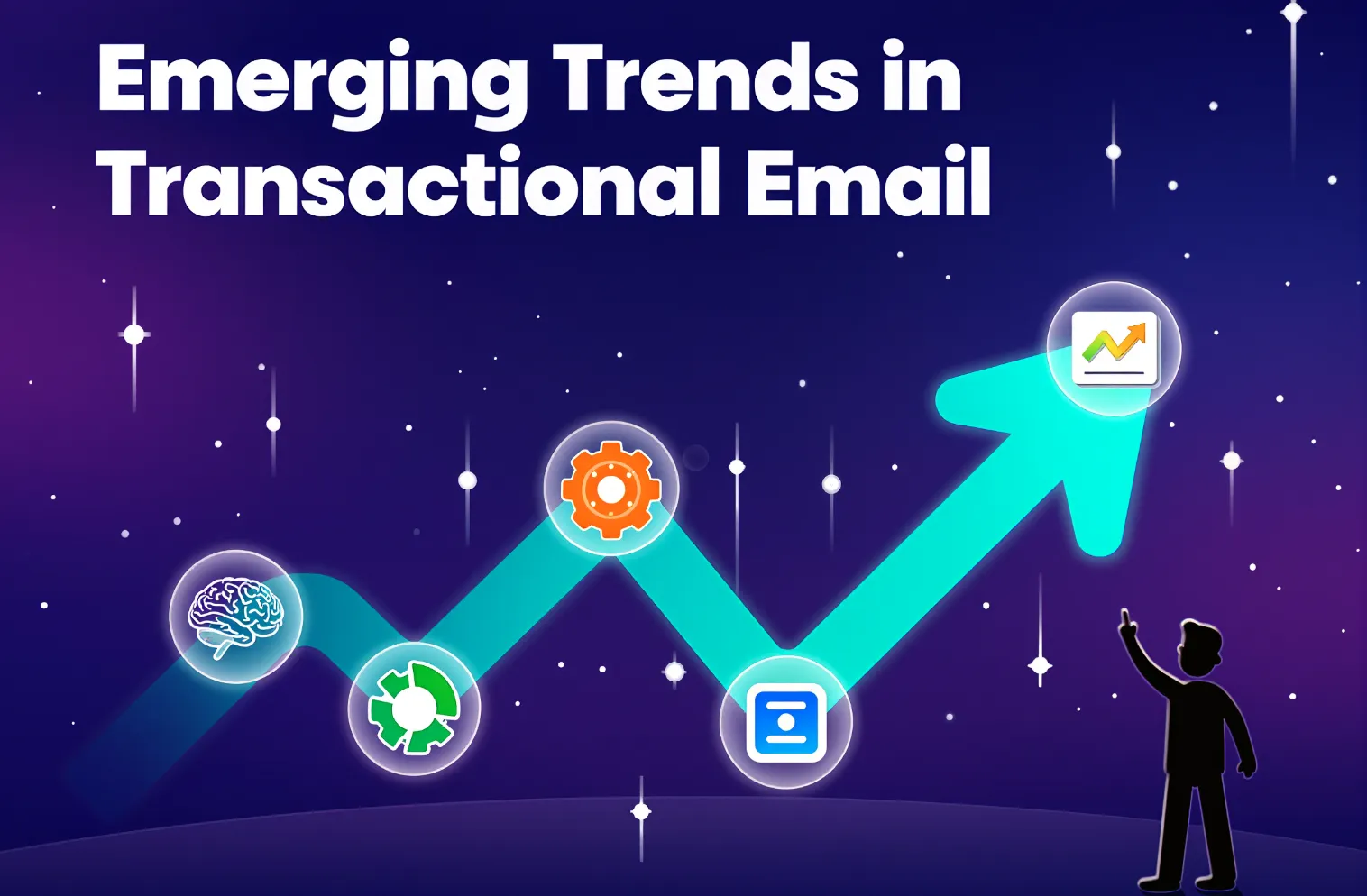
The Top 5 Emerging Trends in Transactional Email Services
These five trends show how transactional email is evolving and why adopting them now will keep your business competitive, modern, and customer-focused.
1. AI-Powered Hyper-Personalization
AI isn't just a buzzword anymore. It's changing the way businesses send transactional messages. Instead of sending the same static message to everyone, companies now use personalized transactional emails that adapt in real time.
Dynamic Content Driven by Real-Time Data:
AI and machine learning study user actions like browsing patterns or recent purchases and add personalized elements directly inside transactional emails.
Example: A customer gets an order confirmation. Right under the purchase details, AI adds product suggestions based on their last viewed items.
Predictive Analytics for Better Timing:
AI tools can analyze user behavior to predict:
- The best send time
- The next likely action
- When a user might churn
This helps businesses send messages that feel helpful, not pushy.
Automated Content Generation:
Generative AI can now create:
- Personalized subject lines
- Tailored email copy
- Location-based recommendations
That means your team spends less time writing and more time improving customer experience. AI-powered personalization is becoming one of the strongest email API best practices of the year.
2. Interactive Email Elements
Emails used to be simple blocks of text. Now, they are becoming mini-apps inside the inbox. Thanks to interactive elements, users can take action without even leaving the email.
Inbox Action Completion:
AMP for Email allows users to:
- Update account info
- Track orders
- Answer surveys
- Confirm appointments
All directly inside the message.
Enhanced Mobile Experience:
We live on our phones. Over 50% of all emails are opened on mobile.
Interactive features like:
- Clickable carousels
- Embedded forms
- Collapsible FAQs
All these make transactional emails faster and easier to interact with on small screens.
Higher Conversion Rates:
Less friction means better results. Interactive emails often see:
- More engagement
- Higher completion rates
- Faster customer responses
They make the journey smoother and more enjoyable.
3. Enhanced Security and Brand Trust
Security is no longer optional. With phishing and spoofing on the rise, customers want to know your emails are real. Strong security practices can raise trust and even boost open rates. Recent benchmarks show that average email deliverability reached 96.43% in 2023, proving how important strong security and platform reliability have become
Visual Authentication With BIMI: BIMI lets you display your verified brand logo inside inboxes like Gmail.
This small visual cue builds trust instantly.
Strict Protocol Compliance: Security tools like SPF, DKIM, and DMARC help prevent spoofing and protect users from fraud. They also support stronger email deliverability 2025 benchmarks.
Building Confidence Through Trust Signals:
When customers see:
- A verified logo
- Secure headers
- Trusted authentication
They are more likely to open the email and act on it. Trust improves engagement, and engagement improves deliverability.
4. Seamless Omnichannel Orchestration
Transactional emails don't work alone anymore. They're becoming part of a bigger cross-channel communication flow. With the rise of SMS, WhatsApp, mobile apps, and chatbots, customers expect updates everywhere.
Unified Customer Journeys:
Imagine this flow:
- A user places an order
- They get a confirmation email
- Right after, they get an SMS with the tracking number
- Later, a WhatsApp alert shares delivery updates.
This creates a smooth, unified experience.
Consistent Cross-Channel Messaging:
Every channel must feel connected.
- Same tone
- Same timing
- Same branding
This eliminates confusion and improves trust.
Why a Centralized Platform Matters:
Managing all this manually is impossible. That's why businesses are shifting to single platforms where they can design and automate complex omnichannel journeys in one place. This is where Aurora SendCloud stands out. We help teams orchestrate email + SMS + real-time notifications from one dashboard, so communication stays consistent, fast, and customer-focused.
5. Sophisticated Data Analytics and Real-Time Optimization
Data is the backbone of modern email strategy. Businesses are moving far beyond basic opens and clicks. They're using advanced analytics to improve customer journeys before problems even show up.
Advanced Performance Metrics:
Companies now track deeper insights such as:
- Read time
- Device trends
- User interaction flows
- Delivery patterns
- Message delays
These metrics show how customers truly interact with your messages.
Real-Time A/B Testing:
Instead of waiting weeks for results, real-time testing lets teams instantly compare:
- Subject lines
- Delivery times
- Templates
- Layouts
This speeds up optimization and keeps campaigns fresh.
Proactive Issue Detection:
Today's analytics tools can:
- Detect unusual bounce spikes
- Flag deliverability risks
- Spot ISP throttling
- Warn you about broken links or layout issues
Fixing problems early protects your sender reputation and keeps transactional messages running smoothly.
Wrapping Up
Transactional emails are no longer simple receipts or alerts. They're becoming smarter, more interactive, and more connected across channels. The five trends leading the way AI personalization, interactive features, tighter security, omnichannel journeys, and advanced analytics are shaping how businesses communicate in 2026 and beyond.
To stay competitive, companies must modernize their transactional email services with tools that support real-time data, automation, security, and flexible communication. And if you're ready to take that next step, platforms like Aurora SendCloud make it easy. We help you send smarter, safer, and more personalized messages that keep customers engaged and coming back. Your users expect more. These trends give you the roadmap to deliver it.