

Many marketers send email campaigns and hope for better results. They write new subject lines, change content, and adjust send times, but results stay the same. Open rates drop. Clicks slow down. Conversions fail to grow. Guesswork causes this problem. Email A/B testing removes guesswork from your email campaign. It helps you test one change at a time and see what works with real data. When you A/B test email campaign, you learn what your audience prefers instead of assuming their behavior.
This guide shows you how to A/B test emails step by step. You will learn how to test subject lines, content, CTAs, and timing. You will also learn how to read results and apply them to improve email marketing results over time.
What Is Email A/B Testing and Why It Matters
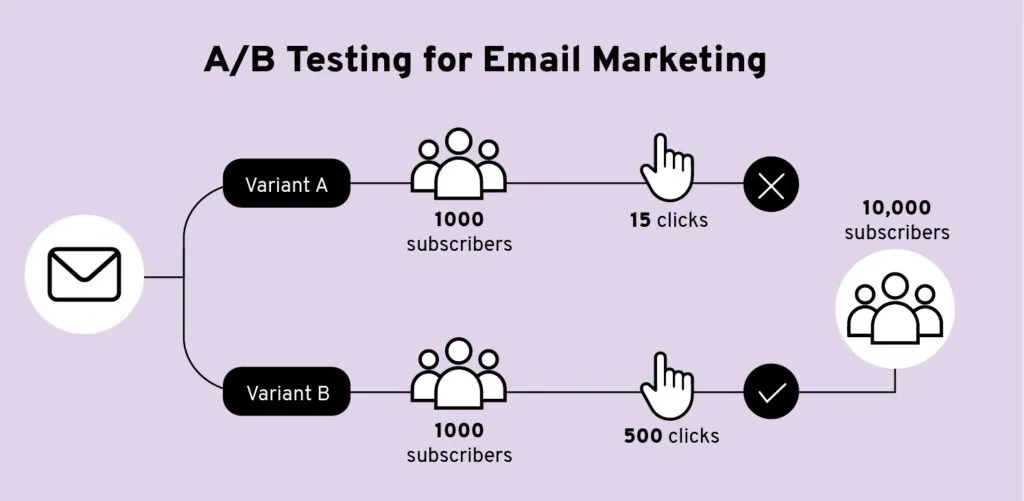
A/B test of an email means creating one email in two versions. Version A includes the original element and makes small changes to version B. Send each version to a portion of the email list to measure which version will achieve better results. Then send the winning version to the rest of the list. You can test elements of email campaigns such as subject, body, sender name, and transmission time. Test only one variable at a time to get clear results.
Why Email A/B Testing Is Non-Negotiable
Email marketing no longer works on guesses. Inbox competition grows every day. People receive many emails daily. If your email campaign fails to stand out, people ignore it. A/B test email campaign helps you improve email marketing using proof, not opinions. It shows you what actually works for your audience.
Benefits of Email A/B Testing
- Data-Based Decisions: Email A/B testing helps you make decisions using real numbers. You stop guessing what works and start using facts.
- Higher Engagement and ROI: When you improve subject lines, content, and CTAs, you increase open rates and clicks. This leads to better returns from every email campaign.
- Less Wasted Effort: Testing saves time. You avoid sending weak emails to your full list. You focus only on versions that show better results.
- Continuous Improvement: Each email A/B test teaches you something new. Over time, your email campaign optimization becomes stronger and more reliable.
Risks of Not Using Email A/B Testing
- Stagnant Results: Without testing, your open rates and clicks stay flat. Your email campaign stops growing.
- Wasted Resources: You spend time and money creating emails that may not work. Testing helps you avoid this loss.
- Missed Growth Chances: Small changes can lead to big gains. Without A/B test email campaign, you never find those improvements.
- Guess-Based Decisions: When you skip testing, you rely on opinions. This approach does not scale and often fails.
How to Conduct Email A/B Testing Using Aurora SendCloud
Aurora SendCloud offers built-in email A/B testing tools designed for real-world email campaigns. The platform allows you to test four main variables: subject, content, sender, and transmission time. These options cover the most important elements of email campaign optimization. Aurora SendCloud simplifies A/B test email campaign. You can set goals, split audiences, run tests, and check results from one dashboard.
Step 1: Define Your Goal and Choose the Test Type
Before you A/B test email campaign elements, you must define your goal. Decide what you want to improve. If you want to increase email open rate, test subject lines, preview text, or sender names. If you want more clicks, test content layout or email CTA optimization. If you want better timing, test best time to send emails. Aurora SendCloud lets you select your test type based on your goal. This keeps your email A/B testing focused and accurate.
Step 2: Create Your Email Variations (A and B)
Create two versions of your email. Change only one element.
For example:
- Version A: “Get 20% Off Today”
- Version B: “Save 20% on Your Order Today”
Everything else stays the same. This ensures clean results. Aurora SendCloud helps you duplicate emails quickly so you can apply changes without errors.
Step 3: Configure Test Audience and Schedule
Choose a small but equal sample from your email list. Aurora SendCloud automatically splits your audience. You can select the test size and duration. You also choose when the test runs. If you test best time to send emails, the platform sends each version at different times. After the test ends, Aurora SendCloud sends the winning email to the remaining subscribers.
Step 4: Analyze Results and Apply Learnings
After the test, review open rates, click rates, and conversions. Aurora SendCloud shows clear reports for each version. Apply the winning version to future email campaigns. Document the result so you can repeat what works. This step completes the email campaign optimization process.
7 Key Elements to A/B Test in Your Email Campaign
Email A/B testing works best when you test the right elements. Below are the most effective areas to test for long-term improvement.
1 Email Subject Lines
Subject lines directly affect open rates. An email subject line test often delivers fast results.
You can test:
- Short vs. long subject lines
- Questions vs. statements
- Personalized vs. generic lines
- Emojis vs. no emojis
- Urgency vs. clear value
Example:
- “Your Order Is Ready”
- “John, Your Order Is Ready for Pickup”
Small wording changes can help increase email open rate across campaigns.
2 Preview Text
Preview text supports the subject line. Many marketers ignore it, but it can increase opens.
Test:
- Summary text vs. extra benefit
- Curiosity vs. clarity
- CTA-style preview text
Example:
- “Limited offer inside”
- “Claim your discount before it ends”
This simple test can improve email marketing results without major effort.
3 Sender Name
People trust senders they recognize. Testing sender names can change open behavior.
Test:
- Company name vs. person name
- Full name vs. first name only
Example:
- “Acme Store”
- “Sarah from Acme”
This test helps improve email open rate for new and returning users.
4 Call-to-Action (CTA) Buttons
Email CTA optimization affects clicks and conversions.
Test:
- Button text
- Button size
- Button placement
- One CTA vs. multiple CTAs
Example:
- “Buy Now”
- “Get My Discount”
Clear CTAs help guide readers and improve email campaign performance.
5 Email Content and Layout
Content structure affects readability and clicks.
Test:
- Short copy vs. longer copy
- Bullet points vs. paragraphs
- Image vs. no image
- Single column vs. multi-column
Choose formats that match your audience’s reading habits.
6 Personalization Level
Personalized emails often perform better, but testing confirms this.
Test:
- Generic greeting vs. name-based greeting
- Static content vs. dynamic blocks
Example:
- “Hello there”
- “Hi John”
Personalization can improve email marketing when used correctly.
7 Send Time
The best time to send emails depends on your audience.
Test:
- Morning vs. evening
- Weekdays vs. weekends
- Different days of the week
Aurora SendCloud supports send-time testing so you can find your best time to send emails using real data.
Common Email A/B Testing Mistakes to Avoid
Even minor mistakes may weaken the A/B test result of the email. Understanding these common issues will help you avoid errors, improve accuracy, and make better decisions in any email campaign.
Testing Too Many Variables
When you change subject lines, content, and CTAs at the same time, you cannot identify what caused the result. Always test one element per A/B test email campaign cycle to get clear and useful data.
Ending Tests Too Early
Many marketers stop tests after a few hours or one day. This approach leads to weak data. Let your email A/B testing run long enough to collect stable results from a proper sample size.
Ignoring Audience Segments
Different subscribers open and click emails for different reasons. If you test without segmentation, results may not reflect true behavior. Segment your list to improve email campaign accuracy and relevance.
Tracking the Wrong Metric
Each test needs a clear success metric. Use open rate for subject line tests and click rate for CTA tests. Tracking the wrong metric leads to poor email campaign optimization decisions.
Not Using Results
Some marketers run tests but fail to apply the results. Always use winning versions in future email campaigns. Testing without action wastes time and blocks email marketing growth.
Advanced Email A/B Testing Tips for Beginners
Advanced Email A/B testing avoids common mistakes even for beginners, enhances accuracy and enables clear data-based decision-making rather than guesswork in any email campaign.
Test One Variable at a Time
You can accurately understand performance improvement factors by testing one change per campaign. With this method, the results of the mail A/B test are clear and reliable, and can be easily applied to future email campaigns.
Ensure Statistical Significance
Use a large enough test group before choosing a winner. Small samples can mislead results and cause poor decisions. Proper sample size improves trust in your email A/B testing data.
Test Regularly
The reader's behavior changes over time. Conduct A/B test email campaign on a regular schedule to continuously improve opening, click and conversion rates for all email campaigns you send.
Document Every Test
Write down what you test, the results, and the winner. This record helps you repeat success and avoid past mistakes. Documentation supports long-term email campaign optimization.
Conclusion
Mail A/B tests lead from guesswork to clear decision making. It is possible to improve the results of email marketing step by step. By testing email campaign elements such as subject, CTA, content, and delivery timing, you can create emails that match actual audience behavior. Aurora SendCloud facilitates the management of A/B test email campaign,supports structured testing, clear reporting and simple execution. Continuous testing improves open, click, and conversion rates across all email campaigns.
Are you ready to simplify email A/B testing and improve results? Start the next test with Aurora SendCloud now.