

Online holiday shopping keeps growing fast. In the 2024 U.S. season, shoppers spent $241.4 billion online, up 8.7% year over year, and more than 54% of those purchases happened on smartphones. At the same time, surveys show that around 60% of consumers prefer email for Black Friday and Cyber Week offers, and more than 70% rely on email for order and shipping updates. That mix makes Christmas email marketing one of the most important channels you control going into 2026.
The flip side is pressure. Inboxes are flooded from early November, and many shoppers now start holiday research and buying weeks before December. A Gartner survey found that about 32% of consumers begin holiday shopping before November, which means “last‑minute” planning leaves money on the table. Rising ad costs, tighter budgets and heavy discounting also mean your emails have to do more than shout “sale.” They need clear timing, smart segmentation, strong mobile design and offers that match real intent. A structured Christmas email strategy for 2026 gives you that edge instead of leaving results to chance.
Why Does Christmas Email Marketing Matter So Much in 2026
Christmas is when a lot of people are actively looking to buy. At the same time, almost 99% of email users check their inbox at least once a day, often several times. That mix of strong buying intent and constant inbox checking makes email a natural place to guide holiday decisions, both for new shoppers and for repeat customers.
Direct Access
With search and social, you rent reach from another platform. With email, you speak straight to people who already gave you their address. Studies show email can be around 40 times more effective at acquiring customers than Facebook or Twitter, because it lands in a quiet, personal space instead of a fast‑moving feed. During Christmas, when shoppers compare options and hunt for deals, that direct line is hard to beat.
Higher Engagement
Average open rates across industries now sit in the 30–35% range, but Christmas and other major retail moments often run higher because people are actively searching for offers, gift ideas and delivery dates. Omnisend’s 2024 holiday data also shows that 44.2% of holiday emails are opened on mobile, more than during the rest of the year, which underlines how often people are checking deals on their phones while they move through their day.
Strong ROI
Email doesn’t just engage; it converts. One recent analysis found that 4.24% of email traffic leads to a purchase, compared with 2.49% from search and 0.59% from social media. Another benchmark reports that for brands using it well, email can drive about 25% of total revenue, not only from big blasts but also from automated flows. Around Christmas, when intent and urgency are both higher, that kind of conversion gap turns into a real sales gap.
Seasonal Loyalty
Christmas brings a lot of first‑time buyers and inactive customers back to your site. For many brands, a significant slice of new customer acquisition happens in Q4, yet only part of that value shows up in December revenue. The rest appears as repeat orders in January, Valentine’s Day, spring sales and the next holiday season. Email is the main tool that connects those dots. With welcome flows, post‑purchase check‑ins and early access for future drops, a Christmas email plan doesn’t just win the season; it builds a base of customers you can talk to all year “him/her,” “for kids,” etc.
How To Build a Winning Holiday Email Marketing Strategy
A strong Christmas plan starts well before December. Recent surveys show that 32% of consumers begin holiday shopping between July and October, and nearly 73% aim to finish most of their shopping before December even starts. On the brand side, segmentation and personalization have become the big levers: segmented email campaigns can lift revenue by up to 760%, yet many smaller merchants still send one generic blast to everyone. A good strategy pulls these pieces together: learn from last year, set clear targets, plan your calendar, segment smartly, and design for mobile from day one.
Review Results
Start with what you already know. Look at last year’s Christmas and BFCM email performance: open rate, click rate, revenue per send, unsubscribe and spam complaints. Flag which sends actually moved revenue and which ones only added noise. Then scan your competitors’ 2024 holiday emails in your own inbox or via a swipe file. Note their timing, offer types, and how they handled shipping cut‑offs or low‑stock messages. This gives you a real baseline instead of guessing what “works for Christmas.”
Set Goals
Turn those findings into a small set of concrete goals. Decide how much revenue or what share of holiday sales you want email to drive, how much you want to increase average order value, and what open or click‑through range you’ll treat as a success. Holiday email can account for 17–26% of annual revenue for many brands, so it helps to be specific about the slice you are aiming for. Tie each goal to a few key levers: more automation, better segmentation, stronger offers, or improved creative.
Plan Calendar
With goals in place, sketch a calendar from early October through early January. Use research on shopping timing as a guide: almost a third of shoppers start before November, and a big chunk want to be done before December. Map major dates (paydays, Black Friday, Cyber Monday, shipping deadlines, Christmas, Boxing Day, New Year) and decide which emails land where: early‑access teasers, main sale pushes, last‑chance reminders, and post‑Christmas clears. A simple calendar prevents both gaps and panicked, last‑minute blasts.
Segment Audiences
Segmentation is one of the biggest performance multipliers. Studies show segmented email can boost revenue by up to 760%, and behavior‑based segmentation can raise click‑through rates by more than 40%. Start with a few practical groups: recent buyers vs lapsed, high‑value customers, specific product categories, and engagement levels (high, medium, low). Plan different offers and send frequencies for each. This keeps your best customers from burning out, while giving quieter segments reasons to re‑engage.
Design Templates
Holiday email is opened on phones more than at any other time of year: around 40–45% of opens now happen on mobile, and about 42% of users say they delete emails that don’t display well on their device. Use mobile‑first Christmas templates: single‑column layouts, large fonts, big tap‑friendly buttons, compressed images, and short copy blocks. Keep branding consistent across all holiday sends so people recognise you instantly in a crowded inbox. Once these templates are ready early, building each Christmas campaign becomes much faster and less chaotic.
Top Christmas Email Marketing Strategies
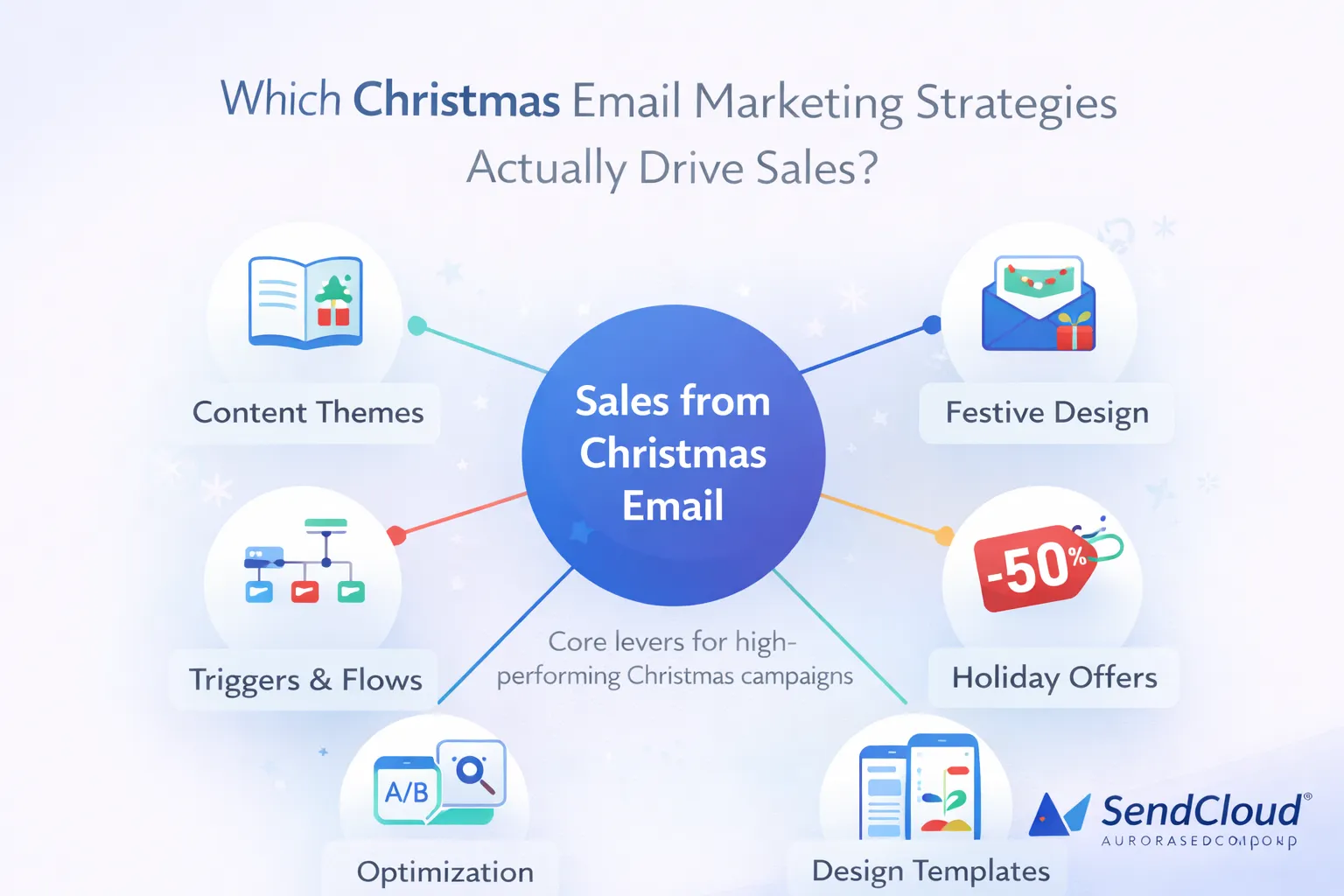
Christmas inboxes are busy, but not random. The brands that win usually lean on the same few levers: strong themes, clear design, sharp offers, good automation, and active testing. Data across 2024–2025 shows that triggered emails like cart and browse recovery consistently beat bulk campaigns, with abandoned cart flows hitting 40–50% open rates and 5–10% conversion rates, far above typical promo sends.
Content Themes
Good content themes make your offers easy to understand and easy to shop. Instead of one generic “Christmas sale” email, build simple formats you can repeat:
- Gift guides by budget, recipient or category (under $25, for parents, for home, etc.)
- “12 Days of Christmas” or advent‑style series, each day tied to a product group or perk
- Round‑ups of reviews, photos and short stories from real customers as social proof
- A small seasonal story about how your brand fits into the holidays (family time, stress relief, local makers)
User‑generated content is especially powerful here. Recent 2025 research shows about 60% of consumers view UGC as the most authentic content and are more likely to act when they see real customers, not just brand photos.
Festive Design
Holiday design should feel seasonal but still readable. Keep a mobile‑first, single‑column layout and use Christmas elements as accents, not clutter. Simple tweaks go a long way:
- Limit your palette to a few Christmas colors plus your core brand colors
- Use clear product photography against clean backgrounds
- Add light animation (small GIF details like snow, twinkling lights, moving bows) but avoid heavy, distracting motion
- Keep headings short and buttons large enough to tap easily on a phone
The goal is instant recognition in a crowded December inbox: at a glance, subscribers should see who is writing and what the offer or idea is.
Holiday Offers
Offers do most of the conversion work during Christmas, so structure them with intent, not guesswork. Useful patterns include:
- Short flash sales tied to clear dates or times
- Tiered discounts that reward higher baskets (spend $50 / $100 / $150, save more at each level)
- Bundles or gift sets that increase average order value while making decisions easier
- Free shipping thresholds and final order cut‑off reminders, which often drive strong late‑season spikes
Benchmarks on cart recovery show why well‑timed, relevant offers matter: open rates around 40–50%, click rates often above 6%, and conversion rates around 3–7% are common for good abandoned cart sequences. Those flows work so well because the offer matches a clear, recent intent.
Triggers & Flows
One‑off blasts are only part of a Christmas plan. The heavy lifting usually comes from automated flows that run quietly in the background:
- Abandoned cart emails that remind shoppers of what they left behind, with or without a small incentive
- Browse abandonment for people who viewed key categories or products several times
- Holiday‑aware welcome flows for new subscribers in November–December
- Post‑purchase emails with care tips, cross‑sells and gift‑related ideas
Abandoned cart flows in particular are top performers. 2025 benchmarks put their open rates near 50% and show that roughly half of cart‑recovery clicks lead to a purchase, making them some of the highest‑ROI emails you can run.
Ongoing Optimization
Christmas performance changes fast, so small, frequent tweaks work better than one big plan you never touch again. Simple habits help:
- A/B test subject lines and preview text on live sends, not just one early campaign
- Watch daily numbers for key dates: delivery, open, click, conversion, unsubscribes and spam complaints
- Pull back on segments that stop engaging to protect sender reputation
- Resend only to non‑openers with a fresh subject and maybe a tighter segment, instead of blasting the whole list twice
Data from multiple providers shows that brands using proper segmentation and triggered flows see far higher revenue per recipient than those relying on generic newsletters alone. Over a short window like Christmas, that difference decides who hits their targets and who just adds more noise to the inbox.
What Christmas Email Marketing Mistakes Should You Avoid
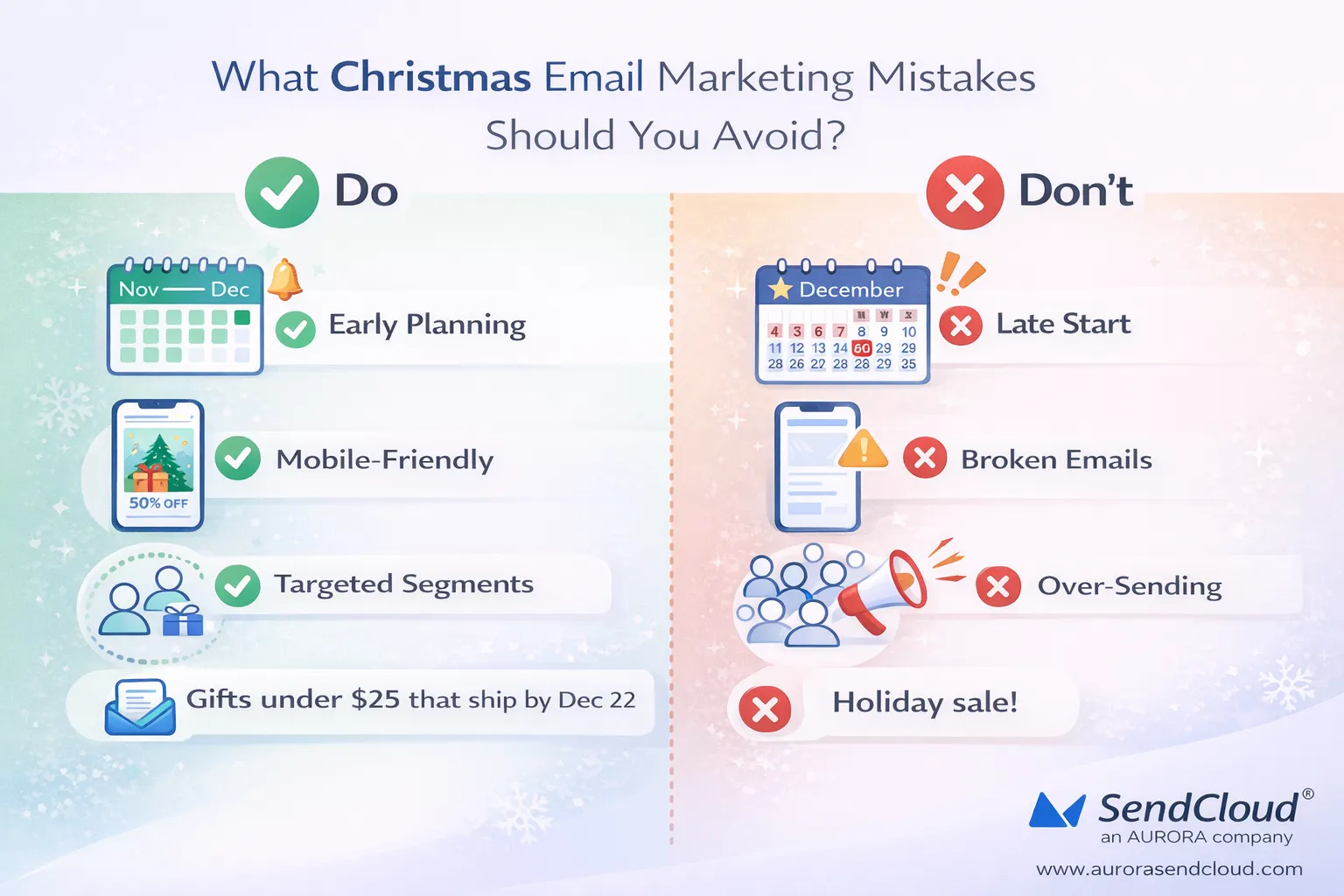
Christmas email can work very hard for you, but the same pressure that makes the season profitable also makes it easy to slip into habits that hurt results. A few common mistakes show up every year: starting late, ignoring mobile, sending too much, weak subject lines, and dropping the ball right after Christmas.
Late Planning
A big share of shoppers now start early. Surveys in recent years have shown that roughly one‑third of consumers begin holiday shopping before November, and many aim to finish most of it before mid‑December. When planning only starts in early December, you miss early‑bird buyers, rush offer decisions, and end up stacking too many last‑minute emails into a short window. A better approach is to map offers and flows in Q3 or early Q4 so November messages are already built and scheduled.
Poor Mobile UX
Most Christmas emails are opened on phones. Various studies put mobile email opens at around 40–50%, and for retail and holiday campaigns the share can be even higher. Yet many holiday emails still use tiny fonts, cluttered multi‑column layouts, and buttons that are hard to tap. That leads to fast deletes and lost sales. Simple, mobile‑first templates—single column, large text, big buttons, compressed images—solve most of this without fancy design work.
Send Fatigue
It’s tempting to send “one more” campaign each day in December, but volume without value shows up quickly in the numbers. Past research has found that around 46% of users say they mark brand emails as spam because they get too many, and unsubscribe spikes often hit during heavy holiday pushes. Flooding your entire list every time you have a new angle pushes complaints up and engagement down. Using segments and pacing (for example, more frequent sends for high‑engagers, fewer but stronger emails for quieter segments) helps avoid burning out your list.
Weak Subjects
Christmas inboxes are full of “Last chance!” and “Holiday sale!” subject lines that blur together. At the same time, tests across millions of emails show that subject lines and preview text are still among the biggest drivers of opens, with clear, specific lines often outperforming vague urgency. Generic subjects waste the moment when a shopper is scanning quickly on mobile. Short, concrete lines that say what’s inside—“Gifts under $25 that ship by Dec 22” instead of “Holiday savings”—tend to stand out more and set honest expectations.
No Post-Holiday Plan
Many brands stop as soon as Christmas shipping ends, but behavior data says otherwise. A lot of people shop again for Boxing Day, returns, gift‑card use and New Year promotions, and those orders often carry good margins because they help clear seasonal stock. Ignoring this period means losing easy, cheap sales from customers who just bought from you and are still warm. A simple post‑holiday sequence—thank‑you, care tips, low‑key sale or “treat yourself” offers—keeps revenue moving while most competitors go quiet.
How Can a Strong Christmas Email Strategy Support Long-Term Growth
Christmas email isn’t only about hitting December revenue targets. Done well, it also fills your list with new buyers, wakes up lapsed customers and gives you clean data on what actually moves them. That combination sets the base for better performance in the next quarter and even the next holiday season.
Retain Buyers
A big part of your Christmas audience is new or one‑time buyers. If they only hear from you during one sale, they stay “discount customers” and often drift away. If you follow their first Christmas order with a simple welcome flow, useful product tips and occasional, well‑timed offers, some of them become repeat customers. Studies on customer value often show that a small group of loyal buyers (around 20%) can drive 60–80% of revenue over time, and that keeping an existing customer is several times cheaper than finding a new one. A clear post‑holiday email plan helps move more Christmas shoppers into that loyal group.
Learn & Improve
Christmas campaigns generate a lot of data in a short window. You see which subject lines get opened, which offers convert, which segments spend the most, and when people actually click. If you tag campaigns and flows properly, you can go back in January and pull simple answers: which three emails brought in the most revenue, which audiences responded best, which discounts eroded margins without lifting orders. Those lessons feed into your “always‑on” email program and into the next holiday season, so each year starts from a higher baseline instead of repeating the same guesses.
Extend Into Q1
The holiday rush rolls straight into returns, exchanges and gift‑card use. Many people have store credit or cash gifts and are still in a buying mindset through January. A strong Christmas email strategy already has this in mind: post‑holiday thank‑you emails, “how to get the most from your purchase” content, gentle “treat yourself” offers, and early access to new‑year collections. That keeps your brand present while others go quiet, helps clear seasonal inventory and turns a short spike in December into a smoother revenue curve across Q1.
How Aurora SendCloud Can Support Your Christmas Email Marketing
Aurora SendCloud gives you most of the tools a Christmas campaign needs in one place: list management, content creation, sending control and detailed analytics. Its email marketing platform supports granular audience targeting with tags and dynamic segments, so you can separate VIPs, high‑value shoppers or inactive subscribers and send different holiday sequences to each group.
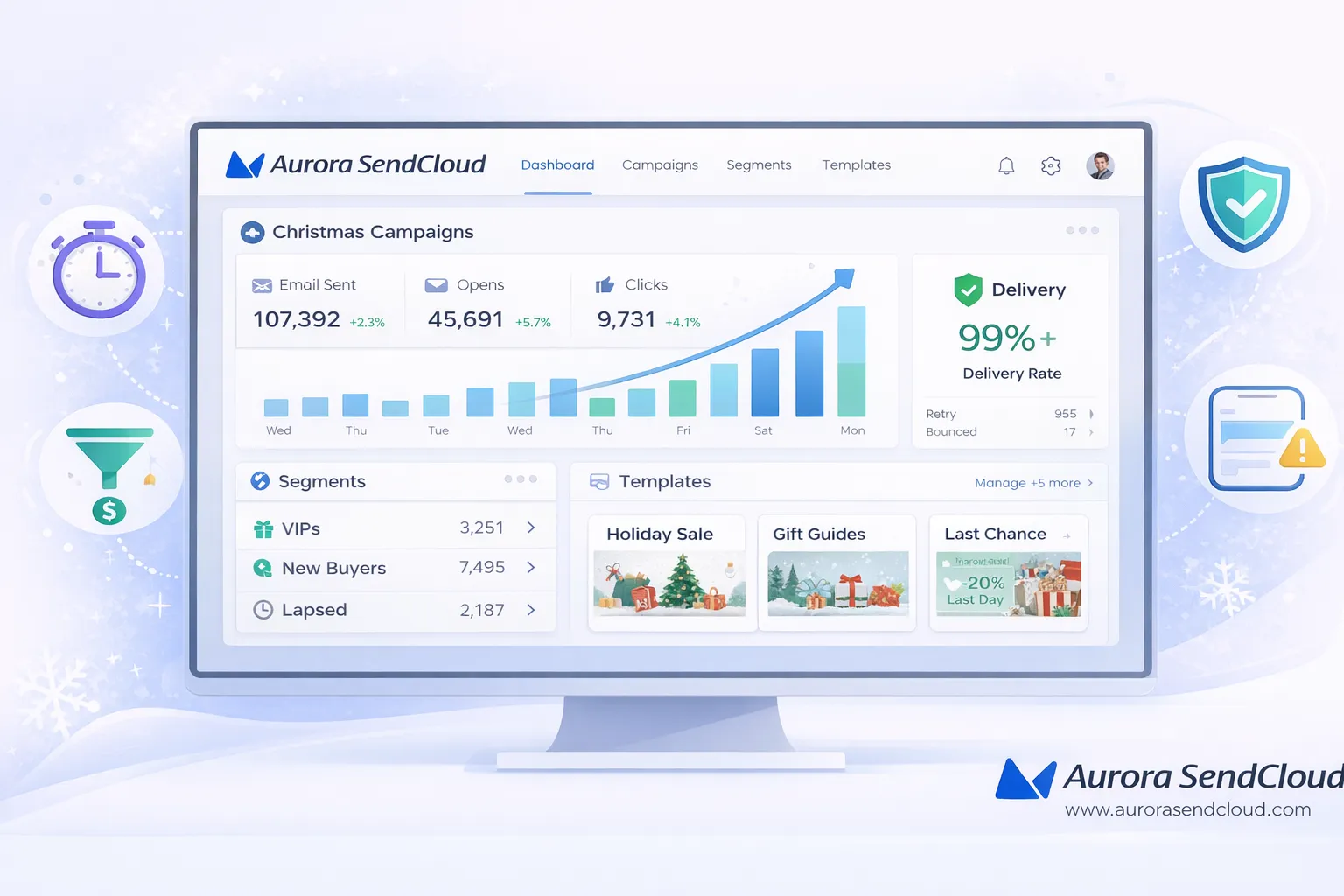
For creative work, you get a drag‑and‑drop editor, an HTML editor and a library of 100+ ready‑made marketing templates, which makes it easy to build mobile‑friendly Christmas layouts without starting from scratch. AI subject and copy suggestions can help test more ideas during busy weeks.
On the delivery side, Aurora SendCloud combines automated IP/domain warm‑up, suppression lists and high‑quality infrastructure (around 99.61% average delivery rate in 2024, handling 3.5B+ emails per month) to keep inbox placement stable when volumes spike in November and December. Campaign and tracking reports show opens, clicks, unsubscribes, complaints and optimal send times, so you can adjust subject lines, timing and segments day by day as Christmas approaches.
Final Words
Christmas email marketing works best when it is planned, focused and grounded in what your customers actually need from you in November and December. A clear strategy pulls together a few core pieces: lessons from last year, specific goals, a simple calendar, smart segments and mobile‑first festive templates. On top of that, strong content themes, clean design, relevant offers and well‑built triggers like cart recovery and post‑purchase flows turn a busy season into real sales instead of noise.
Avoiding the usual pitfalls—late planning, weak subjects, poor mobile experience and no post‑holiday follow‑up—keeps your list healthy and your sender reputation strong. Done this way, Christmas email becomes more than a year‑end push; it seeds relationships and data that support growth well into 2027.
To put this plan into practice with solid deliverability, automation and tracking, you can run your Christmas campaigns on Aurora SendCloud, using its templates, segmentation and robust sending infrastructure to handle the holiday rush with more control and less guesswork.