

An email marketing calendar is a simple plan that shows when you will send out your emails over a year. This calendar helps you keep your email planning clear. You plan topics, dates, and audiences before you start sending. A good content calendar saves time and keeps your messaging steady. You need a clear email marketing calendar to stay on track. When you plan ahead, you can improve email delivery and boost open rates. You can also increase email conversions because you send the right message at the right time. It also helps with segmentation and automation.
This guide shows a full framework for your email marketing calendar. It covers yearly planning, templates, best practices, and key events that matter to your audience.
Annual Email Marketing Framework
Planning your year in chunks makes your email planning easier. We break the year into seasons and include ongoing campaign types. This way, you will improve email delivery, keep open rates high, and support consistent email conversions.
Seasonal Campaign Planning
You should plan your email sends around each quarter. This helps you set clear goals for what you want to achieve with your email marketing calendar.
Q1: New Year Themes and Re-Engagement
Start the year by welcoming your audience back. Send a “Happy New Year” email to reconnect. This boosts open rates early in the year when people check emails after holidays. Plan product refresh emails if you have new items in stock. Send re-engagement campaigns to inactive subscribers. Ask them to update their preferences or offer a small incentive to get them back.
Q2: Spring Promotions and Education
In Q2, focus on email marketing calendar sends that match the season. Use spring themes and freshness in your content. If you run workshops, send invitations and follow-ups. This period works well for helpful content, such as how-to guides and customer stories. These emails support your marketing strategy by adding value, which can boost open rates and increase trust.
Q3: Back-to-Business and Mid-Year Optimizing
After summer, people return to work and start planning towards the end of the year. At this time, let's appeal again to the products and services that customers may need. Mid-year is ideal for confirmation of results. Analyze the email delivery rate, opening rate, and conversion rate via email, and adjust the plan to the end of the year based on the data.
Q4: Holiday Peak and Year-End Gratitude
The last quarter includes the largest shopping season. Plan events like Black Friday and Cyber Monday early. These are important timings in the email marketing calendar. A strong subject and strict timing setting are required to increase the opening rate. Please also plan holiday greeting and year-end thanks email. We can build stronger relationships by showing appreciation. Improve email conversion rates by clarifying offers and direct call-to-action.
Evergreen Campaign Types
Not every email needs to be tied to a season. You should build ongoing campaigns in your email marketing calendar.
Automated Onboarding Flows
When someone joins your list, send a welcome email. Then follow up with tips about your brand. This flow helps new subscribers learn more and trust you. Good onboarding increases engagement and supports long-term email conversions.
Lifecycle Emails
Send emails based on subscriber behavior. Examples include:
- Browse abandonment emails when users look but do not buy
- Cart abandonment emails reminding users about items left behind
- Win-back emails to inactive customers
These lifecycle emails increase email delivery relevance and help you boost open rates because the content matches user actions.
Monthly Newsletters
The monthly newsletter is a means of keeping the brand in the eyes of customers. Stay up-to-date, helpful tips, and use them to share the best content. It is important to be simple, informative and consistent.
Product or Feature Updates
Share details with your customers when adding new products and features. Accelerate e-mail conversions by clearly communicating benefits and purchase and detailed confirmation procedures.
Community or Brand Story Emails
People like to know the story behind a brand. Share customer stories, team highlights, or community news to build emotional connection and trust.
Promotional & Content Rhythm
A well-planned email marketing calendar ensures your audience receives a mix of helpful content and promotional messages, keeping them engaged while supporting consistent email conversions and open rates.
Weekly/Bi-Weekly Content Cadence
Decide how often you will send emails. Weekly or bi-weekly plans work well for many businesses. Keep your rhythm steady so your audience expects your messages.
Monthly Value-Driven Newsletters
Add value in every newsletter. Give tips, insights, or special offers that matter to your audience. Higher value gives you better email delivery and stronger email conversions.
Quarterly Performance Review Emails
Every quarter, send a summary of your best content, biggest wins, or new goals. These emails help you reflect and share progress with your audience.
Event-Triggered Emails
Use triggers like purchases, registrations, or milestones to send timely messages. These emails show your audience you pay attention to their actions. They usually have strong open rates and lead to higher email conversions.
Key Calendar Categories
A full email marketing calendar includes must-have events, industry triggers, and region-specific holidays. Including these in your email planning ensures you never miss key dates.
Must-Have Annual Events
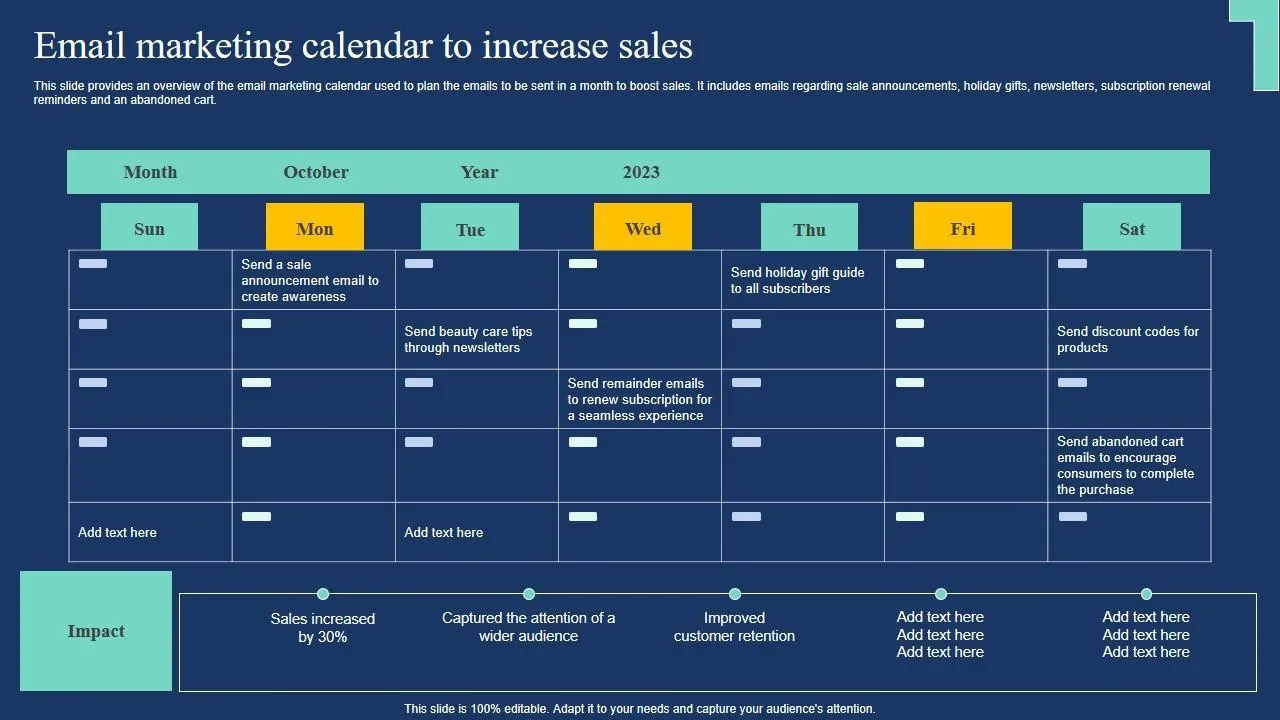
Each business should plan emails around major events. These dates often lead to high email engagement and strong email conversions.
- New Year / Year Opening campaigns to start fresh
- International Women’s Day to honor global audiences
- Mother’s Day & Father’s Day offers and greetings
- Mid-Year promotions to boost summer sales
- Black Friday & Cyber Monday strong sales push
- Holiday gifting season messaging and special offers
- Year-End Thank-You campaigns to show appreciation
These events can improve your email delivery performance if you plan early.
Industry-Specific Events
Different industries need different events in their email marketing calendar.
E-commerce
E-commerce brands should plan around major sales seasons. Schedule launches, clearance events, and new collection reveals. Tie your emails to key shopping dates.
SaaS Businesses
Software companies send product release notes, onboarding tips, and renewal reminders. These emails support user success and help you improve email conversions.
B2B Brands
Business clients respond to webinars, report releases, and conference season emails. These events help you build authority and show value, boosting open rates and engagement.
Region-Specific Holidays
Include holidays that matter to your audience based on where they live. Examples include:
- Lunar New Year for East Asian markets
- Golden Week events for travel and sales
- Thanksgiving for U.S. audiences
- Christmas for global engagement
Understanding local holidays improves your email delivery and audience relevance.
What to Include in an Email Marketing Calendar
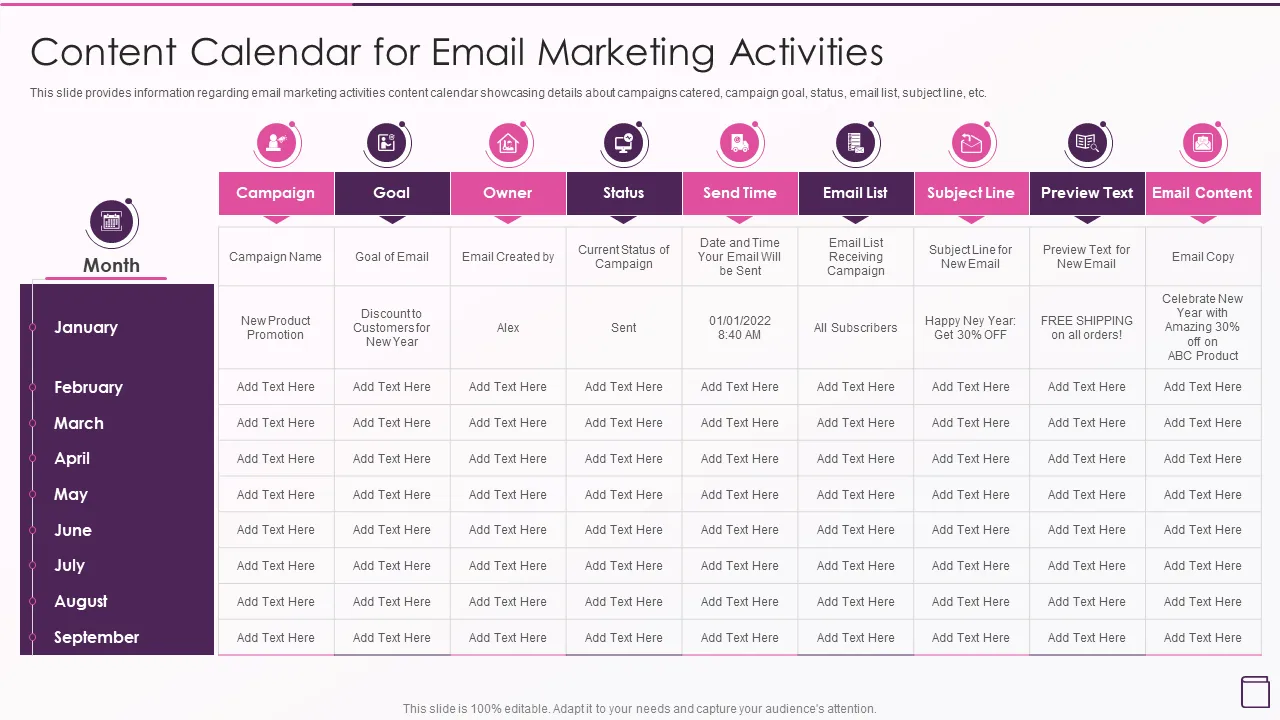
Your email planning should include details for every campaign. This level of detail improves execution and results.
Planning Elements
- Campaign Objective: Write a clear goal. Are you sending to sell, inform, or re-engage? The objective shapes your message and call to action.
- Send Date/Time: Choose the best day and time to send. Test different times to see when your audience reads most.
- Target Audience Segment: Group your list by behavior, location, or interest. Targeted emails increase open rates and email conversions because they match what subscribers want.
- Email Type: Identify the type of email: newsletter, promo, update, or lifecycle. Knowing this helps you design content that fits the purpose.
- Content Theme: Choose a strong theme for every send. A clear theme helps your audience connect with your message.
- CTA Strategy: Your call to action must be clear and direct. Tell your readers what you want them to do next.
Performance Indicators
Track key metrics to improve your email marketing calendar over time.
Core KPIs
- Open rate tells you how many people open your email
- Click-through rate (CTR) shows how many click links
- Conversion rate tells you how many take the action you want
- Revenue per email shows financial impact
Record these in your content calendar to spot trends and improve future sends.
A/B Test Items
Test subject lines, send times, and content layouts. A/B testing helps you find what works best for your audience.
Traffic Source Integration
Note how your email works with SMS, social posts, or ads. Integration increases reach and helps boost open rates and email conversions.
Cross-Channel Alignment
A strong email marketing calendar connects email with other channels.
Email + SMS
Use SMS to remind your audience about key emails. Aurora SendCloud offers SMS tools that work with your email campaigns. These messages help you reach people who check texts more often than email.
Email + Social Campaigns
Share campaign themes on social channels. Cross-promotion increases recognition and trust before your email arrives.
Email + Website Personalization
Match your email messages with landing page content. Personalized pages improve user experience and increase email conversions.
Automation + One-Off Campaigns
Keep your core automated emails running while adding special campaigns during peak times. This keeps email delivery consistent and efficient.
Template: Annual Email Marketing Calendar Structure
Use a simple structure to plan your year. You can use tools like sheets or calendar software.
Quarter Goals
The email marketing calendar should have a defined quarterly target. The objectives are to increase open rates, conversions through email, and subscriber lists, as well as, optimizing engagement. Monitoring of these aims will allow calculating the results, which will serve as a benchmark in the further planning of emails.
Key Events & Seasonal Opportunities
Identify all important dates (holidays, sales events, industry-specific events, etc.) that affect your readers. By incorporating these into the content calendar, timely message transmission, improved mail delivery rate, and increased engagement can be realized, and the opening rate can be steadily increased throughout the year.
Content Cadence
How frequently are you going to send emails to make sure that they are consistent and that you do not overwhelm the subscribers. Develop a weekly, bi-weekly, and monthly strategy that would incorporate the promotion messages with the value-oriented messages in an equal ratio to align with the marketing efforts and enhance the overall email conversion rate.
Campaign List
Include all planned sends:
- Promotional campaigns
- Educational emails
- Automated lifecycle emails
Channel Integration Notes
Documenting channel integration shows how your emails connect with SMS, social media, or other platforms. This ensures consistent messaging, improves email delivery, and helps coordinate campaigns across channels to maximize engagement and email conversions.
KPI Tracking Table
Use a table to record performance metrics for each send. This helps you spot what works and what needs change. Aurora SendCloud provides email content templates that work with your calendar planning. You can use these to speed up your work and keep messaging consistent.
Best Practices
Follow these tips when you build your email marketing calendar.
- Build a 12-month calendar but update it each quarter.
- Balance sales emails with value-driven content.
- Localize your campaigns by region and culture.
- Keep your brand voice steady and test different approaches.
- Use automation as a base and special campaigns to grow results.
These practices help you maintain a strong email marketing calendar that supports your business goals.
Conclusion
A clear email marketing calendar improves your execution quality. It keeps your email planning organized and helps you stay ahead of key dates. You send consistent messages that match your audience’s needs, which boosts open rates and strengthens email conversions. Using a full-year plan ensures relevance and supports steady growth. You can use data from past emails to make better decisions.
A good calendar lets you adjust, test, and learn so your email delivery keeps improving. With a practical email marketing calendar, you stay focused on goals. You manage your time better. Most importantly, you build stronger connections with your audience, making your email work more effective each year.