


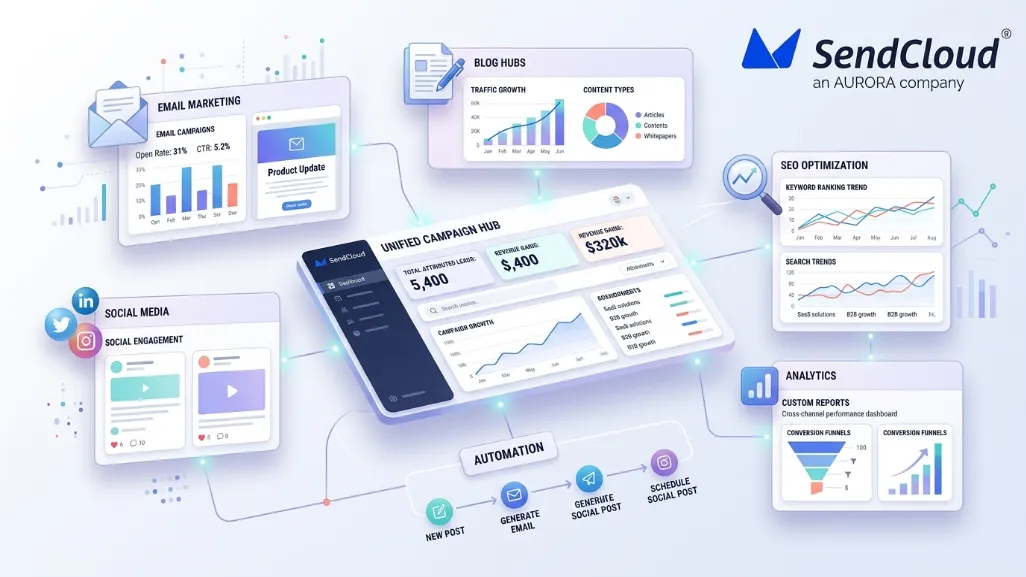
Content teams are expected to do more with less. You need to plan ideas, write content, send emails, post on social media, track results, and prove ROI. That is hard when your tools do not work together.
The right content marketing tools can make the whole process easier. They help you create faster, publish with more control, reach the right people, and measure what works.
But not every tool is right for every business. Some platforms are built for email. Some are better for social media. Others help with SEO, automation, analytics, or high-volume sending.
This guide compares the best content marketing tools for 2026 and shows how to choose the right mix for your team.
What Are Content Marketing Tools?
Content marketing tools are platforms that help you plan, create, publish, promote, and measure content.
They can support many parts of your marketing workflow, including email campaigns, blog posts, social media, landing pages, lead nurturing, analytics, and automation.
Core Meaning
A content marketing tool helps your team turn ideas into campaigns.
For example, one tool may help you find blog keywords. Another may help you schedule social posts. Another may help you send emails and track engagement.
Common types include:
- Email marketing tools
- Social media tools
- SEO and blog tools
- Content planning tools
- Automation platforms
- Analytics tools
- Email delivery tools
The best setup depends on your goals. A small business may need a simple email and social stack. A SaaS company may need deeper automation, deliverability, and reporting.
Why They Matter
Good tools save time. They also help your team work with more focus.
Instead of guessing what to publish, you can use data. Instead of sending every email by hand, you can use automation. Instead of checking five dashboards, you can track campaign results in one place.
The biggest value is clarity. You can see which channels drive traffic, leads, clicks, and revenue.
What Are the Best Content Marketing Tools in 2026?
There is no single “best” tool for every business. The best content marketing tools solve a clear problem.
Here are the main categories marketers should compare in 2026.
Email Delivery
Email is still one of the strongest content channels. But sending an email is not the same as reaching the inbox.
Delivery means the receiving server accepted your email. Deliverability means your message landed where people can see it, such as the inbox instead of spam.
Aurora SendCloud fits this category. It is built for teams that care about inbox placement, sender reputation, warm-up, and reliable campaign sending.
It can support email content marketing with:
- Inbox placement checks
- Domain and IP warm-up
- Sender reputation monitoring
- Campaign tracking
- Email automation
- Templates and testing
- SMTP and API sending
This makes Aurora SendCloud useful for SaaS teams, startups, and growing businesses that rely on email for growth.
It is especially helpful when your main issue is not writing more emails, but getting those emails seen.
All-in-One Marketing Suites
All-in-one tools combine several marketing features in one platform.
Popular examples include Mailchimp and HubSpot. These tools often include email, forms, landing pages, CRM features, automation, templates, and reporting.
They are a good fit for:
- Small businesses
- General marketing teams
- Teams that want fewer tools
- Brands that need simple campaigns
- Companies that want CRM and email together
The main benefit is convenience. You can manage many tasks from one dashboard.
The downside is depth. All-in-one platforms may not offer the same level of technical deliverability control as a specialized email platform.
If you need broad marketing features, they can work well. If email performance is your main growth lever, you may need a more focused email solution.
Automation Tools
Automation tools help you send the right message at the right time.
Examples include ActiveCampaign and Kit. These platforms are known for workflows, triggers, tags, segments, and email sequences.
They are useful for:
- Welcome emails
- Lead nurturing
- Product onboarding
- Re-engagement campaigns
- Abandoned cart emails
- Post-purchase education
The goal is simple. When someone takes an action, your system responds with useful content.
For example, if a visitor downloads a guide, they can enter a follow-up sequence. If a trial user does not activate, they can receive onboarding tips. If a customer buys, they can receive product education.
Automation saves time, but it can get messy. Start with simple workflows. Build only what your team can manage and improve.
Social Media Tools
Social media tools help you plan, schedule, publish, and track posts across platforms.
Common examples include Buffer, Hootsuite, Sprout Social, and Later.
They are useful for:
- Scheduling posts in advance
- Managing multiple channels
- Tracking engagement
- Reviewing comments and replies
- Planning content calendars
- Reporting on social performance
These tools work best when social media is part of a wider content system.
A blog post can become LinkedIn posts, short videos, carousels, and newsletter content. A social tool helps you manage that process without posting manually every day.
If your team only posts once in a while, a simple tool may be enough. If social drives leads or brand awareness, choose a platform with stronger reporting and team workflows.
Blog and SEO Tools
Blog and SEO tools help your content get found on search engines.
Popular examples include Semrush, Ahrefs, Surfer SEO, Clearscope, and Jasper.
They help with:
- Keyword research
- Competitor analysis
- Content briefs
- SEO scoring
- Topic gaps
- Rank tracking
- Content updates
These tools are useful for teams that rely on organic traffic.
They can show what people search for, how hard a keyword is, and what top-ranking pages cover. This helps you create stronger blog posts and landing pages.
But SEO tools do not replace strategy. They give you data. Your team still needs to understand the audience, write clearly, and offer real value.
Enterprise Sending Tools
High-volume sending tools are built for scale.
Examples include SendGrid and Amazon SES. These platforms are often used by companies that send large volumes of transactional or marketing email.
They are useful for:
- Developer-led teams
- SaaS products
- Large email senders
- App-based notifications
- Custom email systems
The main benefit is flexibility. These tools can handle large volumes and API-based sending.
The challenge is setup. You may need technical support for authentication, templates, bounce handling, tracking, suppression lists, and deliverability monitoring.
Aurora SendCloud can be a balanced choice for growing teams that want strong email performance without building everything from scratch.
Quick Comparison
| Tool Type | Examples | Best For | Main Strength |
|---|---|---|---|
| Email delivery | Aurora SendCloud | Email-heavy teams | Deliverability and inbox placement |
| All-in-one suites | Mailchimp, HubSpot | Small and mid-size teams | Many features in one place |
| Automation | ActiveCampaign, Kit | Lifecycle campaigns | Behavior-based workflows |
| Social media | Buffer, Hootsuite, Sprout Social | Multi-channel posting | Scheduling and engagement |
| SEO and blog | Semrush, Ahrefs, Surfer SEO | Organic growth | Keyword and content insights |
| Enterprise sending | SendGrid, Amazon SES | High-volume senders | Scale and API control |
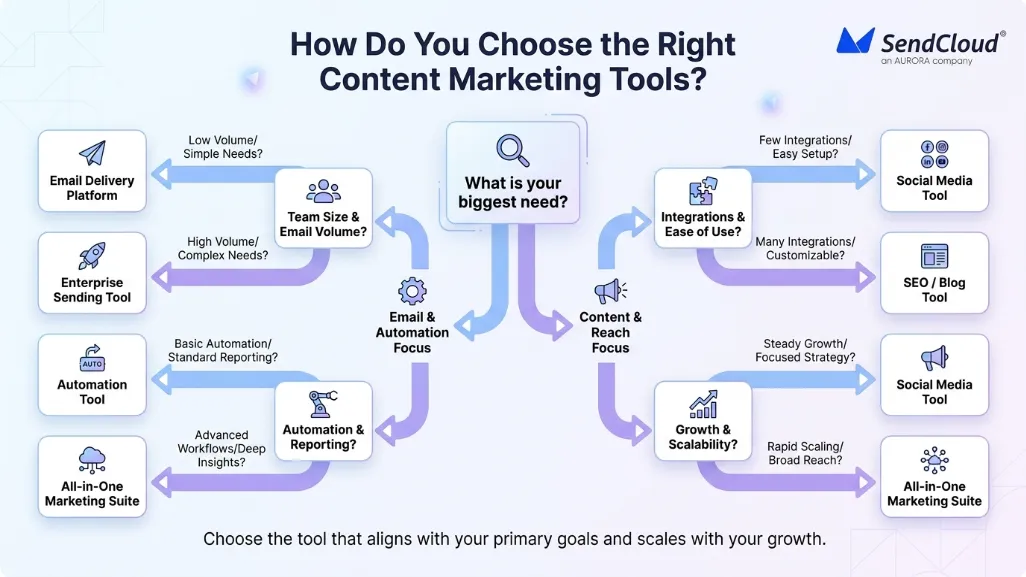
How Do You Choose the Right Content Marketing Tools?
The best tool is the one that solves your real problem.
Do not start with a feature list. Start with your biggest bottleneck.
Main Goal
Ask what your team needs most.
Do you need more website traffic? Better email engagement? Stronger inbox placement? Faster publishing? Better reporting? Less manual work?
Each goal points to a different type of tool.
If your emails are landing in spam, a general social media tool will not help. If your blog has no search traffic, a complex automation platform may not fix the issue. Match the tool to the problem first.
Team Size
Your team size matters.A solo founder may need simple tools with easy setup. A small team may need templates, calendars, and basic reporting. A larger marketing team may need approvals, roles, permissions, and deeper integrations.
Do not buy a tool your team cannot manage.
A simple tool used every week is better than a powerful tool nobody understands.
Email Volume
Email volume affects your tool choice.
If you send a small monthly newsletter, you may only need basic templates and simple automation. If you send thousands of product, sales, or lifecycle emails, you need more control.
As volume grows, deliverability becomes more important.
You need to watch:
- Bounce rates
- Spam complaints
- Sender reputation
- Domain warm-up
- Inbox placement
- Engagement rates
- Authentication setup
This is where a deliverability-focused platform can help.
Automation Needs
Some teams need simple automation. Others need complex workflows.
Before choosing a tool, map your ideal customer journey.
Ask:
- What starts the workflow?
- Who receives the message?
- What should they get?
- When should they get it?
- What happens next?
Keep it simple at first. A clear welcome sequence is often more useful than a large workflow no one can explain.
Reporting Needs
Good reporting helps you improve.
For email, track opens, clicks, bounces, unsubscribes, spam complaints, inbox placement, and conversions.
For SEO, track rankings, organic traffic, clicks, leads, and content updates.
For social media, track reach, engagement, shares, traffic, and leads.
Do not focus only on vanity metrics. Page views and likes are useful, but they do not tell the full story.
The best tools connect activity to outcomes.
Integrations
Your tools should work together.
Check whether each platform connects with your:
- CRM
- Website
- Forms
- Analytics
- Ecommerce store
- Landing pages
- Product data
- Help desk
Weak integrations create manual work. They also make reporting harder.
For example, your email platform may show clicks. Your CRM may show leads. Your analytics tool may show website visits. If these systems do not connect, you cannot see the full campaign journey.
Ease of Use
Ease of use is not a small detail. It affects adoption.
Before choosing a tool, check how easy it is to:
- Set up campaigns
- Build templates
- Create segments
- Read reports
- Add team members
- Connect integrations
- Get support
Your team should be able to use the tool without constant technical help.
How Can You Build a Unified Content Marketing Stack?
A strong content stack connects your channels.
Your blog should support your email list. Your emails should promote your best content. Your social posts should drive people to useful resources. Your analytics should show what worked.
Plan First
Start with strategy before software.
Define your audience, goals, channels, content types, and success metrics. Then choose tools that support that plan.
A basic content plan should answer:
- Who are we trying to reach?
- What do they care about?
- Where do they spend time?
- What content do we need?
- What action should they take?
- How will we measure success?
This keeps your stack focused.
Connect Channels
One idea can support many channels.
A single blog post can become:
- A newsletter
- A LinkedIn post
- A short video script
- A webinar topic
- A lead magnet
- A nurture email
This helps your team get more value from each idea.
Your tools should support this workflow. SEO tools shape the blog. Email tools send the content. Social tools promote it. Analytics tools measure results.
Share Data
Data should not stay locked inside one platform.
When tools share data, your team can see which topics, channels, and campaigns perform best.
For example, you may find that one blog topic brings high-quality leads. You can then turn that topic into email sequences, social posts, and sales content.
Shared data also improves automation. The cleaner your data, the better your workflows.
Track Results
Track campaigns, not just channels.
A product launch may include blog posts, emails, social posts, landing pages, and sales follow-up. If you measure each piece alone, you miss the full picture.
Set one goal for each campaign. Then track the full journey.This helps you understand which tools support real growth.
Improve Often
Your content stack should improve over time.
Review your tools every few months. Remove tools your team does not use. Update old templates. Refresh blog posts. Clean your email list. Test new subject lines. Improve workflows.
Small changes can create strong gains over time.
What Mistakes Should Beginners Avoid?
Many beginners buy tools too quickly. They choose what looks popular instead of what fits their needs.
That often leads to higher costs, messy workflows, and weak results.
Too Many Tools
Too many tools can slow your team down.
Every extra platform adds setup, training, cost, and reporting work.
Start with the basics:
- One planning tool
- One email platform
- One social tool
- One analytics source
- One SEO tool if search matters
Add more only when you have a clear reason.
Weak Analytics
Many teams track activity, not performance.
They know how many posts they published. But they do not know which posts created leads, clicks, or sales.
Set clear goals before each campaign. Then choose tools that can measure those goals.
Poor Training
A good tool fails when the team does not know how to use it.
Create simple internal guides for common tasks. Show people how to create campaigns, choose segments, test emails, read reports, and fix common issues.
Training helps your team get more value from the tools you already pay for.
Price Only
The cheapest tool is not always the best choice.
A low-cost tool can become expensive if it causes manual work, poor deliverability, weak reporting, or slow growth.
Look at total value. A better tool should save time, improve results, reduce risk, or support growth.
Mobile Gaps
People read emails, blogs, and social posts on mobile.
Your tools should help you preview and test content on different screens.
Check:
- Subject lines
- Preview text
- Button size
- Page speed
- Form length
- Font size
- Email layout
A good campaign can fail if the mobile experience is poor.
No Optimization
Do not launch campaigns and forget them.
Review performance often. Test one change at a time.
For email, test subject lines, send times, segments, CTAs, and templates.
For blogs, update old posts, improve titles, add internal links, and refresh outdated examples.
Optimization turns average campaigns into better ones.
How Aurora SendCloud Helps With Email Content Marketing
Email content only works when people receive it. Aurora SendCloud helps teams manage that part of the content stack.
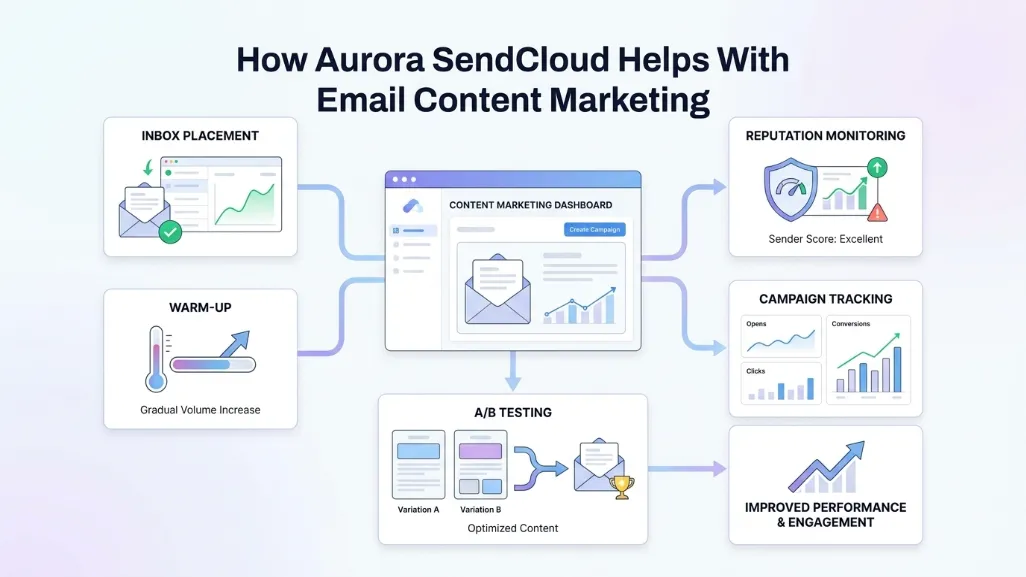
It is built for marketers who need better deliverability, warm-up, campaign tracking, templates, and automation. It also supports SMTP and API sending, which helps teams manage both marketing and product-related emails.
Aurora SendCloud can help with:
- Inbox placement: See whether emails land in the inbox, spam, promotions, or blocked folders.
- Warm-up: Build sender reputation with gradual sending plans.
- Reputation monitoring: Watch for issues that may hurt deliverability.
- Campaign tracking: Measure delivery, engagement, bounces, and invalid emails.
- A/B testing: Test subject lines, content, sender names, and send times.
- Templates: Create reusable email layouts for campaigns.
This makes Aurora SendCloud a strong choice for teams that rely on email as a core content channel.
Instead of only sending emails, you can manage the systems that affect whether those emails reach your audience.
Conclusion
The best content marketing tools in 2026 are not the ones with the most features. They are the ones that fit your goals, team, channels, and growth stage.
If your main goal is organic traffic, invest in SEO and blog tools. If your team posts across many channels, use a strong social media platform. If email drives your leads, sales, or customer engagement, focus on deliverability, automation, list quality, and clear reporting.
A strong content stack should work as one system. It should help you plan better, publish faster, reach more people, and improve with data.
Aurora SendCloud can help you run email content marketing more reliably with deliverability, warm-up, tracking, and campaign tools built for better inbox performance.