

Email remains one of the most measurable marketing channels for SMBs and mid-market companies. Recent Litmus research reports an average return of about $36 for every $1 spent, while other industry research continues to report higher returns for some businesses. However, high ROI does not come from sending more emails. It comes from reaching the right subscribers, sending useful content, maintaining strong email deliverability, and measuring business results.
That makes practical email marketing tips more important in 2026. Gmail and Yahoo continue to enforce sender authentication and spam-control requirements, while Apple Mail's privacy features make open rates less reliable. AI can also create copy faster, but it cannot decide your audience, offer, timing, or business goal for you.
This guide covers 15 email marketing best practices across four stages: audience health, content and design, deliverability, and analytics.
15 Email Marketing Tips for 2026 at a Glance
| Tip | Stage | Benchmark |
|---|---|---|
| 1. Clean inactive contacts | List health | Review subscribers inactive for 6 months |
| 2. Segment by behavior | List health | Aim for stronger engagement than broad sends |
| 3. Use confirmed consent | List health | Keep a clear consent record |
| 4. Re‑engage inactive users | List health | Run a 3‑email sequence |
| 5. Keep subject lines short | Content | Aim for under 50 characters |
| 6. Write useful preheaders | Content | Give the email a clear second message |
| 7. Focus on one CTA | Content | Aim for one main action |
| 8. Use AI with human review | Content | Review 100% of AI‑generated copy |
| 9. Test email rendering | Content | Test major clients before sending |
| 10. Configure SPF, DKIM and DMARC | Deliverability | Pass authentication checks |
| 11. Keep spam complaints low | Deliverability | Stay below 0.1%; never reach 0.3% |
| 12. Warm new domains slowly | Deliverability | Increase volume gradually |
| 13. Reduce reliance on opens | Analytics | Prioritize clicks and conversions |
| 14. Test one variable | Analytics | Change one element per test |
| 15. Track revenue per email | Analytics | Set a business‑specific revenue target |
Stage 1: Email Audience Health Tips
Good email marketing strategies 2026 start with the audience. A large list does not automatically create better results. Old, inactive, invalid, or poorly acquired contacts can lower engagement and create delivery problems. Use these email marketing tips to keep your database useful.
1. Clean Your Email List Every Quarter
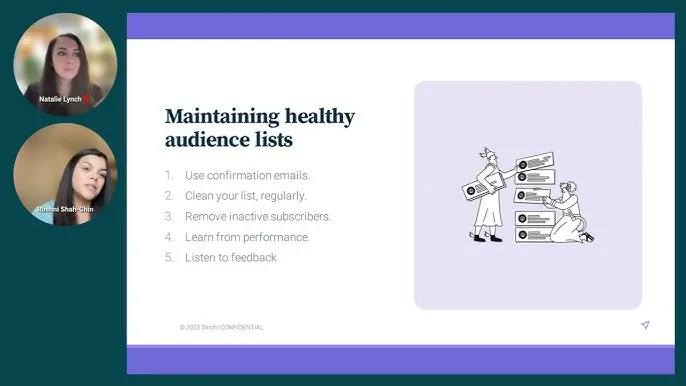
Inactive subscribers can make your engagement rates look weak and may contribute to poor sender reputation. Review your database at least once every quarter and identify people who have not engaged for a long period.
A practical benchmark is to review contacts with no meaningful engagement for six months. Do not delete everyone immediately. First, check whether they have clicked, purchased, replied, or completed another valuable action that an open report might miss.
Use recent activity to decide who belongs in your active segment. This is one of the most useful email marketing best practices for SMB teams because a smaller, engaged list can be more valuable than a large inactive database.
2. Segment Subscribers by Behavior
Demographic data such as age, job title, or location can help, but behavior often tells you more about what a subscriber wants right now.
Create groups based on actions such as:
- Recent purchases
- Product or page visits
- Email clicks
- Download activity
- Trial status
- Customer lifecycle stage
Then adjust the message for each group. Someone who visited a pricing page should not receive exactly the same message as someone who downloaded a beginner guide.
Behavior-based segmentation is a core part of effective email marketing advice because it gives your campaigns a clear reason to exist. Measure clicks and conversions by segment rather than comparing only total opens.
3. Use Clear, Permission-Based Signup Methods
Do not buy email lists. Purchased contacts did not necessarily ask your company to contact them, and poor engagement can damage your sender reputation.
Use signup forms that clearly explain what subscribers will receive. Keep records of consent, source, date, and relevant terms. Where your legal or business requirements call for confirmed opt-in, use it.
Double opt-in can help verify that an address belongs to the person who submitted it, but it is not universally required by GDPR in every situation. The important point is that your collection process must match the applicable privacy rules and your stated consent purpose.
Permission-based collection remains one of the most important email marketing strategies 2026 because good campaigns start with people who actually want your messages.
4. Re-Engage Subscribers Before Suppressing Them
Do not remove an inactive subscriber without giving them a clear chance to stay.
Build a simple three-email re-engagement sequence:
- Email 1: "We miss you" with useful content.
- Email 2: Offer a reason to return, such as a discount or useful resource.
- Email 3: Explain that you will stop sending regular emails unless they confirm interest.
After the sequence, suppress people who still show no meaningful engagement.
This approach gives inactive contacts one final choice while protecting your active audience. It also supports better email deliverability because you reduce repeated sends to people who no longer want your content.
Stage 2: Content and Design Tips
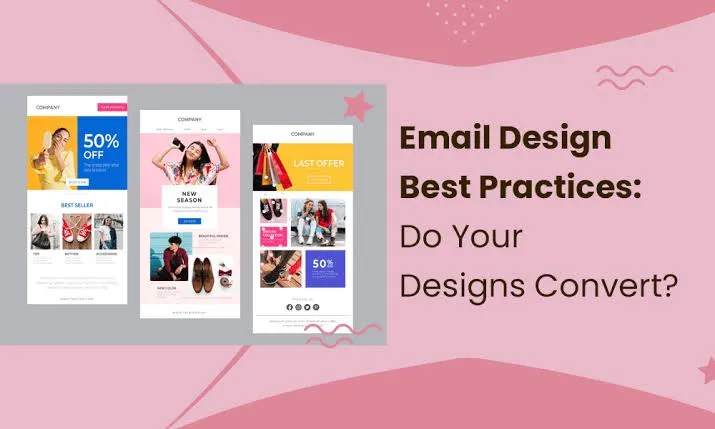
Once your list is healthy, focus on the message. Good email marketing tips should help subscribers understand the value of an email within seconds. Keep the subject, preheader, body, and CTA focused on the same goal.
5. Keep Subject Lines Short and Specific
Mobile screens can cut off long subject lines, so avoid unnecessary words. A practical target is under 50 characters, although the ideal length depends on the device and email client.
Instead of writing:
"Here Are Some Important New Updates You Should Know About This Month"
Try:
"Your October product updates"
Your subject should tell the subscriber what they will get without making a false promise.
Also test different approaches. A benefit-led subject may work better for one audience, while a direct product update may work better for another. Subject-line testing remains useful, but do not judge the winner only by opens because privacy features affect that metric.
6. Treat the Preheader as Extra Message Space
The preheader gives you another opportunity to explain why someone should open the email. Do not leave it as random text pulled from the first line of your message.
Use the preheader to add information rather than repeat the subject.
Subject: Save 20% on your next order
Preheader: Your offer ends Sunday at midnight.
Apple Intelligence also changes how some users consume email. Apple says Mail can automatically show AI-generated summaries of emails when Apple Intelligence is enabled. That means your opening content should communicate the main point clearly even when a subscriber sees a summary rather than reading every line.
7. Give Each Email One Main CTA
Too many competing links can make it harder for readers to decide what to do next. Choose one primary action for each campaign.
For example:
- Download the guide
- Start your trial
- Book a demo
- Shop the sale
You can include supporting navigation when needed, but make the main CTA obvious.
WordStream has reported that emails with a single CTA increased clicks by 371% in the study it cites. Treat that figure as a historical benchmark rather than a guarantee for every business. Your own test results should decide what works for your audience.
8. Use AI for Production, Not the Final Strategy
AI can help your team generate subject-line options, summarize customer research, create first drafts, and produce copy variations. However, your marketing team should decide the audience, offer, timing, tone, and campaign goal.
A useful workflow is:
Human strategy → AI draft → Human fact check → Brand review → Test → Send
Check AI output for incorrect claims, repeated ideas, unsupported promises, and unnatural language. Do not let AI create dozens of emails simply because production has become faster.
This is one of the most practical email marketing best practices for 2026: use AI to reduce manual work while keeping campaign decisions under human control.
9. Test Templates Across Major Email Clients
An email can look correct in your editor and still break in a subscriber's inbox. Outlook, Gmail, Apple Mail, and mobile clients can handle HTML differently.
Before sending an important campaign, check:
- Desktop and mobile layouts
- Button links
- Images and alt text
- Font rendering
- Dark mode
- Long URLs
- Personalization fields
- Unsubscribe links
Gmail can clip messages that exceed its message-size limits, so avoid unnecessary code and repeated content. A clean template also makes future campaigns easier to build.
Testing is a basic part of email marketing advice because a broken CTA or missing personalization field can waste an otherwise strong campaign.
Stage 3: Deliverability and Technical Tips
Strong content cannot help if messages do not reach the inbox. In 2026, email deliverability depends heavily on authentication, recipient engagement, complaint rates, infrastructure, and sending behavior.
10. Configure SPF, DKIM, and DMARC
Set up SPF and DKIM for every sending domain you control, then configure DMARC and monitor authentication results.
Gmail requires bulk senders sending around 5,000 or more messages to personal Gmail accounts in a 24-hour period to authenticate mail and meet additional requirements. Gmail says bulk senders must use SPF and DKIM and publish a DMARC policy, among other requirements. Yahoo similarly requires bulk senders to use SPF, DKIM, and DMARC.
Do not assume these requirements apply only to very large companies. Authentication helps establish a trusted identity for your domain and reduces spoofing risks. For a detailed setup process, see our Guide to Email Authentication.
11. Keep Spam Complaints Below 0.1%
The often-cited 0.3% figure should not become your target. Gmail currently advises senders to keep user-reported spam rates below 0.1% and prevent them from reaching 0.3% or higher.
That gives your team a better working benchmark:
Target: below 0.1%
Warning zone: rising toward 0.3%
Serious problem: 0.3% or higher
To reduce complaints, send only to people who expect your emails, make unsubscribing easy, control frequency, and remove consistently inactive contacts.
Low complaint rates support stronger email deliverability and give mailbox providers better signals about subscriber satisfaction.
12. Warm New Sending Domains Gradually
Do not move from zero email activity to a huge campaign overnight. A new sending domain needs time to build a sending history.
A practical starting point is 5–10 emails per day for very small new programs, followed by gradual increases based on engagement and delivery results. There is no universal doubling schedule that works for every sender, so treat volume increases as controlled tests rather than a fixed rule.
Start with your most engaged subscribers. Monitor bounces, complaints, authentication, clicks, and inbox placement before increasing volume.
Gradual sending is one of the safest email marketing strategies 2026 for teams launching a new domain, subdomain, or major sending infrastructure.
13. Stop Treating Open Rate as Your Main KPI
Apple Mail Privacy Protection makes open-rate data less dependable because Apple can prevent senders from seeing whether recipients actually opened a message. This makes clicks, conversions, replies, purchases, and revenue more useful for many campaigns.
Track metrics such as:
- Click-through rate
- Conversion rate
- Revenue per email
- Unsubscribe rate
- Spam complaint rate
- Bounce rate
- Replies or booked meetings
Use opens as a directional signal rather than the final measure of success.
This change is central to modern email marketing best practices. Your team should care less about how many tracking pixels fire and more about whether subscribers take the action that supports the business goal.
Stage 4: Analytics and Optimization Tips
The final group of email marketing tips focuses on testing and revenue. Good analytics help you understand which messages produce business results instead of simply generating activity.
14. Test One Variable at a Time
A/B testing works best when you can identify why one version won.
Test one major variable at a time:
- Subject line
- Send time
- CTA wording
- Offer
- Email layout
- Content angle
If you change the subject, CTA, offer, and design together, you may get a winner without knowing which change caused the improvement.
Set the primary success metric before launching the test. For a sales campaign, that may be revenue or purchases. For a lead-generation email, it may be qualified form submissions.
This simple approach makes email marketing advice easier to apply because every test produces a clear lesson for the next campaign.
15. Track Revenue Per Email, Not Just Open Rate
Revenue per email gives marketing and revenue teams a common business metric.
Calculate it as:
Revenue per email = Email-attributed revenue ÷ Emails delivered
A benchmark such as $0.05–$0.15 per email can serve as an initial planning range for some programs, but businesses should set their own target based on average order value, conversion rate, customer lifetime value, sales cycle, and attribution method.
For example, 50,000 delivered emails generating $5,000 in attributed revenue produce $0.10 revenue per email.
Do not compare that number blindly with another company. Instead, compare your campaigns against your own historical results and identify which segments, offers, and lifecycle emails produce the highest return.
Email Marketing Tips FAQ: Common Questions
What are the most important email marketing tips for 2026?
Start with permission-based list growth, clean inactive contacts, behavior-based segmentation, useful content, authentication, low complaint rates, and revenue-focused analytics. These areas have the largest effect on campaign quality.
What are the best email marketing best practices for small businesses?
Small businesses should focus on a clean list, clear consent, simple segmentation, mobile-friendly templates, one main CTA, proper SPF/DKIM/DMARC setup, and measurable conversion goals.
How can I improve email deliverability?
Improve email deliverability by authenticating your sending domain, reducing spam complaints, removing poor-quality contacts, sending relevant content, honoring unsubscribes, and increasing new-domain volume gradually.
Should I still track email open rates?
Yes, but do not use opens as your main success metric. Apple Mail privacy features can affect open reporting, so combine opens with clicks, conversions, replies, purchases, and revenue.
Is AI useful for email marketing?
AI can help with research, drafts, subject-line ideas, personalization, and content variations. Humans should still control the campaign goal, audience, offer, facts, brand voice, and final approval.
How often should I clean my email list?
Review list health at least quarterly. A six-month inactivity window can provide a practical starting point, but adjust it based on your normal buying cycle and engagement pattern.
What should I test first in an email campaign?
Start with one high-impact variable, such as the subject line, CTA, offer, or send time. Define your success metric before the test so you can make a clear decision.
How do I measure email marketing ROI?
Track revenue attributed to email against the full cost of your email program. Also monitor revenue per email, conversion rate, customer value, and results by campaign and segment.
Final Takeaway: Build an Email Program That Reaches the Inbox
The best email marketing tips for 2026 are not about sending more messages. They are about sending better messages to people who want them, while maintaining technical standards that protect your sender reputation. Start with the four stages in order. First, maintain a healthy audience. Next, create focused content with a clear CTA. Then protect email deliverability with authentication, low complaint rates, and careful sending practices. Finally, measure clicks, conversions, and revenue instead of relying on opens alone. If you want to improve the technical side of your email program, learn more about Aurora SendCloud's email marketing services and its approach to campaign delivery and email infrastructure.
The goal is simple: build a clean list, send useful emails, protect your sender reputation, and measure the revenue your emails create.